DE
DE EN
EN
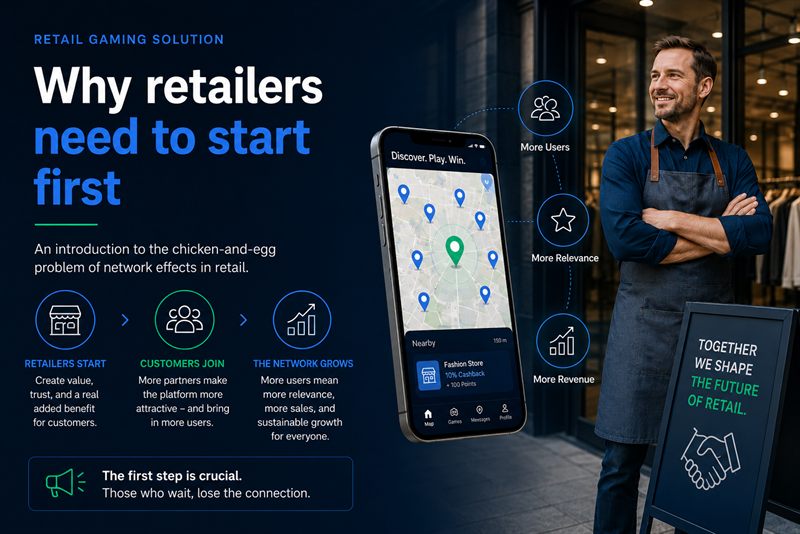
With any new platform that connects two sides, the same question comes up sooner or later: who should be there first, the users or the providers? This is often called the chicken-and-egg problem, as if both sides depended on each other equally. For a location-based platform that connects real shops with a digital game world, that picture doesn't hold. It isn't a chicken-and-egg problem. It's a pure chicken problem, and the answer is clear.
Why the order is clear here
A player who opens a new digital world has practically unlimited choice online: content, distraction and reward. A single, still-empty store with no real connection to that world gives them no obvious reason to shift their attention there. The incentive for the player only appears once real places are actually part of the game world, once there's something to discover, collect or achieve. Without participating retailers, the game world is meaningless to the player.
The retailer, by contrast, can feel a difference from the very first participating store: more visibility within the platform, an extra incentive for store visits, regardless of how many other retailers are already taking part. The value for the retailer grows with the size of the network, but it doesn't only start at a certain user count. That makes clear who has to go first for a working system to emerge at all.
Why that isn't a drawback, but an opportunity
A retailer who joins early benefits from an effect that can't be repeated once the market is established. Few participating locations mean less competition within the game world for players' attention. Anyone joining later shares the same attention with far more locations. Joining early isn't a risk you take despite being there first. It's an advantage you have precisely because of it.
What that means for working together
This starting position isn't a special case of Retail Gaming Solution, but a property of any platform that connects two different groups. Well-known networks in other industries all came about the same way, with a first, small group of providers willing to start ahead of the user numbers. The key question for a retailer is therefore not whether they're too early, but whether they want to help shape a network's growth from the start, rather than just use it later.
Conclusion
On a location-based platform, the player can't be there first, because without participating retailers they have no incentive. The retailer, by contrast, benefits from the very first participation, regardless of the size of the network. Going first here isn't the exception, but the only order that works, and joining early is exactly what secures the least competition for the target audience's attention.
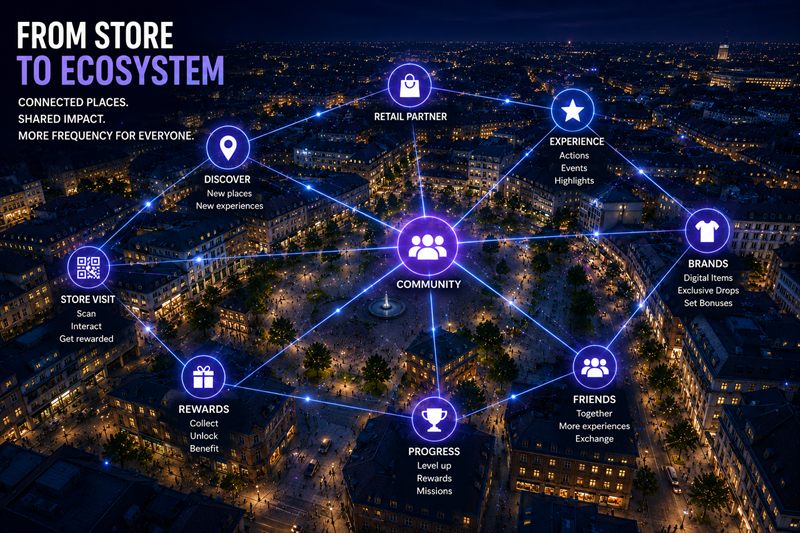
Retail Gaming Solution is building a location-based platform that connects physical retail and brands in a digital ecosystem.