DE
DE EN
EN
What does digital transformation in physical retail really mean?
Digital transformation in retail is often equated with having your own online shop. In fact it's about more: connecting digital experiences with the physical store in a way that actively brings people back there, rather than keeping them online.
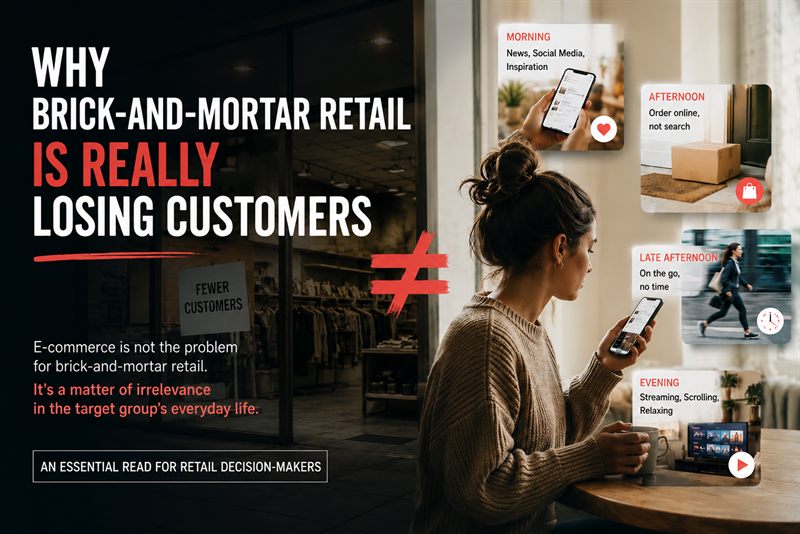
Retail doesn't have a price problem. It has a relevance problem.
For years, the debate about the future of physical retail has revolved around the same topics: rents, competition from Amazon, a lack of parking, falling purchasing power. These are real factors, but they don't fully explain why town centres lose footfall even where the economic conditions are actually sound. The deeper reason is different: physical retail has stopped being part of its target audience's digital everyday life.
Consumers today spend a significant part of their day in digital worlds. Not just shopping online, but in social networks, streaming platforms, games and connected communities. These digital spaces have something in common: they are designed to make you come back again and again. They reward continuity, create curiosity, and generate the feeling of being part of something bigger. Physical retail structurally offers none of that, and that is where the real gap lies.
What sets a digital ecosystem apart from retail digitisation
There is a fundamental difference between digitising retail and creating a digital ecosystem for retail. Digitisation means: existing processes are represented digitally. Till systems are connected, stock is recorded in real time, customer data is managed centrally. That is necessary, but it doesn't change how the consumer perceives things.
A digital ecosystem starts from the consumer, not the retailer. It doesn't ask: how can I make my business more efficient? It asks: how do I become part of the world my customers already live in? This shift in perspective is fundamental, because an ecosystem doesn't emerge from the sum of individual digital tools. It emerges when physical places such as shops, brands and cities become parts of a coherent digital experience that consumers actively seek out and want to move around in.
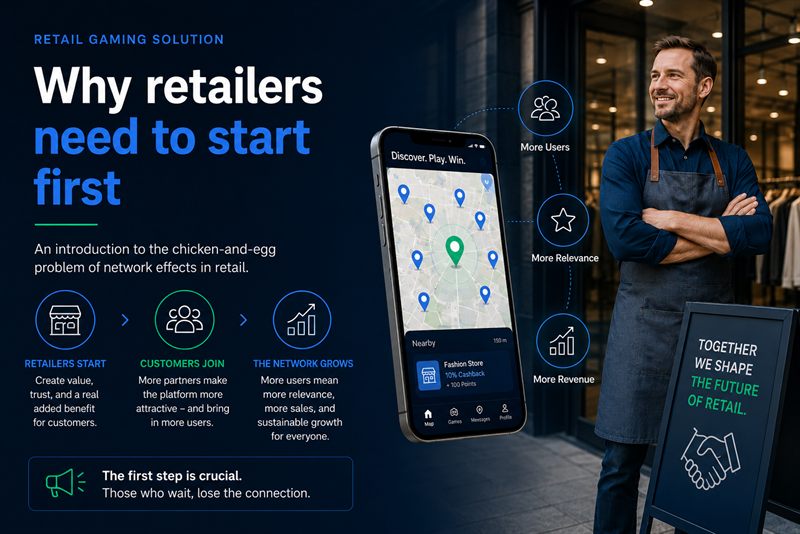
Retail Gaming Solution is building exactly this ecosystem. The platform connects physical retail with a digital world in which every purchase becomes part of a bigger journey. Retailers and brands don't become advertisers in someone else's system; they become anchor points in a world consumers explore for themselves. This isn't an add-on to an existing strategy. It's a new infrastructure for the relationship between retail and consumer.
Why previous approaches don't close this gap
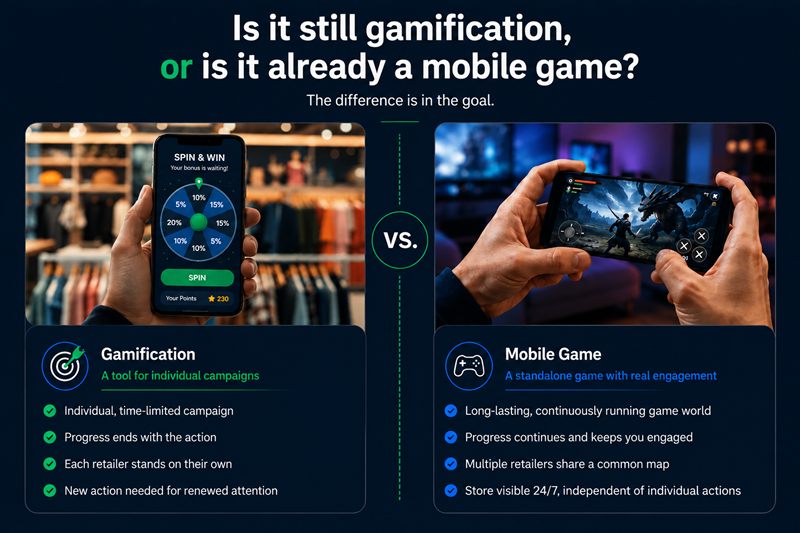
Over the past few years, the market has seen many attempts to make physical retail more digitally relevant. Click & Collect, QR codes on the shelf, digital price tags, loyalty apps with points systems: the list of individual measures is long. None of them has solved the structural problem, because none of them creates an ecosystem. They all optimise sub-aspects without answering the real question: why should someone go into a town centre if they won't find an experience there that isn't available to them online?
Points programmes create transactional incentives and reward a purchase that would have happened anyway. They don't anchor the retailer in the consumer's digital everyday life; at most they appear briefly in view just after a transaction. Dedicated brand apps don't solve the problem either: they ask the consumer to maintain a separate digital relationship with every retailer, an effort the vast majority aren't willing to make. The proof is in the usage data. Most shopping apps aren't opened again after the first use. What's missing is a shared digital space in which many retailers, brands and locations coexist, and in which the consumer has a genuine reason to spend time continuously and keep coming back.
When physical places gain digital meaning
The core principle of the Retail Gaming Solution platform describes what happens when a physical place, such as a store, a shopping street or a city centre, becomes an active part of a digital world. Not as a backdrop, not as ad space, but as a place that plays its own role in the consumer's digital experience.
In concrete terms, that means visiting a shop unlocks something that doesn't exist online. It isn't just the route to the product; it is itself part of an experience the consumer actively seeks. Retailers and brands don't become game developers in the process. They contribute their location; the platform brings the users and, with them, the foot traffic.
For cities, this model is especially relevant. Understanding the town centre as a coherent, explorable territory, with its own digital depth for visitors to discover, goes far beyond short-term discount promotions or seasonal events. It creates structural reasons for footfall, not situational ones.
The ecosystem principle: why being connected is more than cooperating
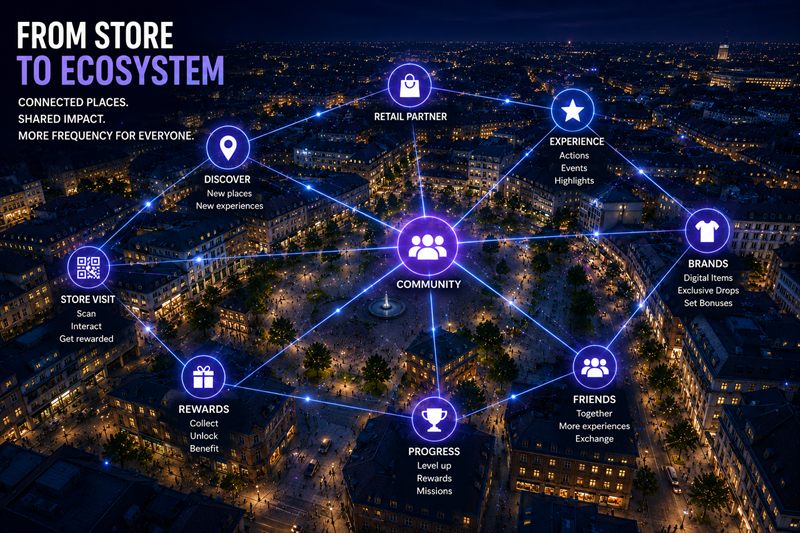
An ecosystem works by a different logic from a cooperation or a network. In a network, participants are connected to each other. In an ecosystem, they depend on each other and together generate a value none of them could create alone. That is the decisive difference between a bundle of individual measures and a genuine digital ecosystem for physical retail.
When a consumer uses the platform, they aren't interacting with a single retailer. They move through a world in which many retailers, brands and locations create meaning together. Every additional participant, every further retailer, every further brand, every further city, makes the ecosystem more valuable for everyone else. That is a network effect in its purest form, and it can't be achieved structurally through individual measures. For retailers, that concretely means: they benefit from the attention and engagement other participants bring into the system, and reach, beyond their own customer base, everyone moving through this digital world.
What that means for retail decision-makers
The strategic question for retail managers, store managers and marketing leads in retail is no longer whether they have to become more digital. That question has long been answered. The relevant question is: what kind of digitality do they invest in?
Those who keep investing in isolated tools, proprietary apps and transactional bonus programmes digitise their business, but don't become part of their customers' digital world. Those who instead become part of an ecosystem consumers already actively use anchor their location permanently in the digital everyday life of an audience that doesn't reject physical experiences. They seek them out, when the incentive is right.
Physical retail has a structural advantage over e-commerce that no algorithm can replicate: physical space. The experience that arises when you enter a place, touch something, meet someone. So far this advantage has been largely untapped, because it isn't connected to consumers' digital everyday life. A digital ecosystem closes exactly this gap and turns physical space back into what it can be: a place you deliberately set out for.
Conclusion: new category, new thinking
There is no blueprint for what Retail Gaming Solution is building with its platform, because this category doesn't yet exist. That isn't a weakness; it's the core of the approach. Anyone creating a new infrastructure for physical retail can't take their bearings from existing categories. They have to define a new one.
That's exactly what this new category is. It describes how physical places gain digital meaning, not through advertising, not through discounts, not through apps nobody uses, but through an ecosystem that makes retailers, brands and cities parts of a digital world in which consumers are already at home. For physical retail, that isn't an experiment. It's the only way to stay structurally relevant in a world where digital experiences increasingly decide which physical places are worth visiting.
Retail Gaming Solution is building a location-based platform that connects physical retail and brands in a digital ecosystem.