DE
DE EN
EN
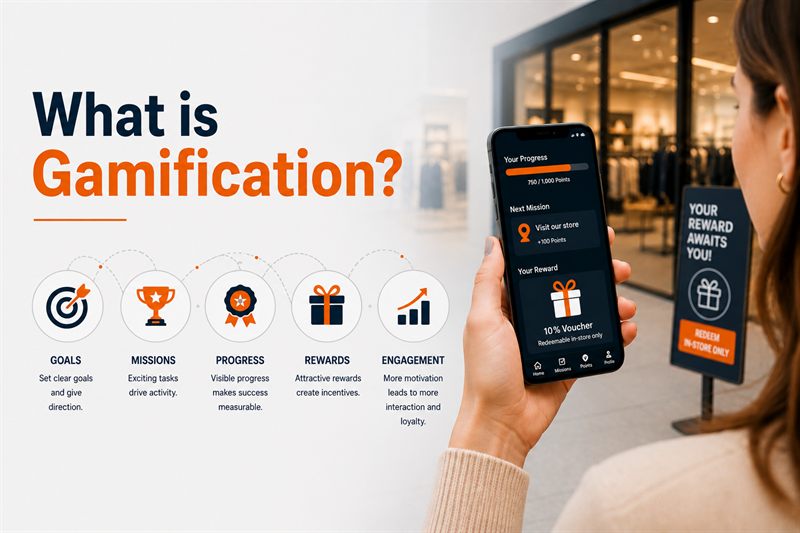
Gamification in marketing means deliberately using game-typical elements such as progress, reward or competition to reach marketing goals that are harder to achieve with classic methods, such as stronger customer loyalty, more repeat visits, or a deeper emotional relationship with the brand. Unlike gamification in general, the focus here isn't the learning effect or intrinsic motivation, but a specific commercial marketing goal.
What are the goals of gamification in marketing?
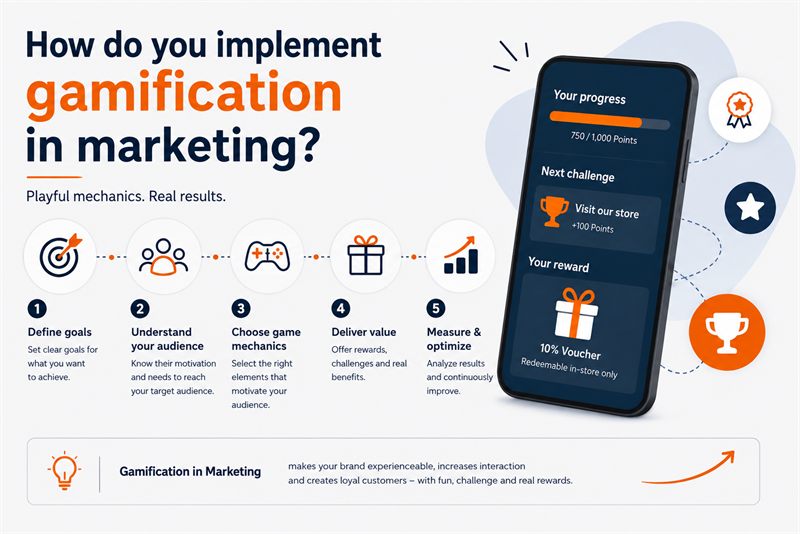
Companies use gamification in marketing mainly for four goals. The first is stronger customer loyalty, by rewarding recurring interactions with the brand rather than only incentivising a single purchase.
The second is higher visit frequency, especially in physical retail, where a playful incentive creates an extra reason to visit the store, independent of a specific intention to buy.
The third is reaching younger audiences, who barely respond to classic discount and points systems any more, but are used to playful mechanics from their digital everyday life.
The fourth is gathering behavioural data, since interactions within a gamified system are measurable in detail, unlike a single, anonymous store visit.
Which elements are typically used in marketing?
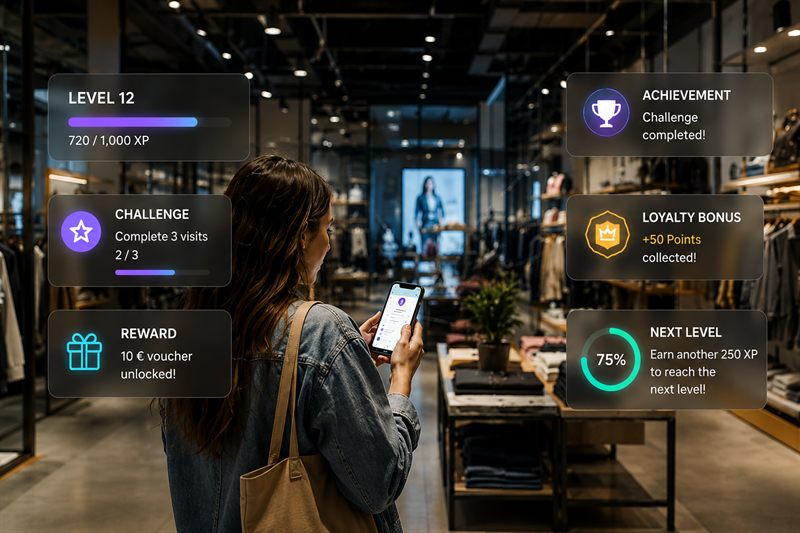
In a marketing context, a few elements have proven especially effective. Progress indicators create the feeling of getting closer to a goal, for example through levels or collection progress. Reward systems recognise particular behaviour, ideally with an experiential value rather than a pure price cut.
Competitive elements such as leaderboards appeal to the ambition of certain user groups, but should be used carefully, as they put off part of the audience rather than motivating them. Chance elements, such as surprise rewards, generate extra attention, because people respond particularly strongly to unpredictable positive events.
What are the limits of gamification in marketing?
Gamification in marketing doesn't work automatically. Reduced to short-term purchase incentives alone, it's barely different from a classic discount system and loses its real advantage: creating an emotional rather than purely monetary bond. Rules that are too complex or unclear overwhelm users and lead to disinterest rather than engagement. And if the playful layer has no genuine connection to the brand or the shopping experience, it feels bolted on rather than integrated. Successful implementations therefore always tie the game mechanics closely to a real, understandable benefit for the customer.
How can gamification be used sensibly in marketing?
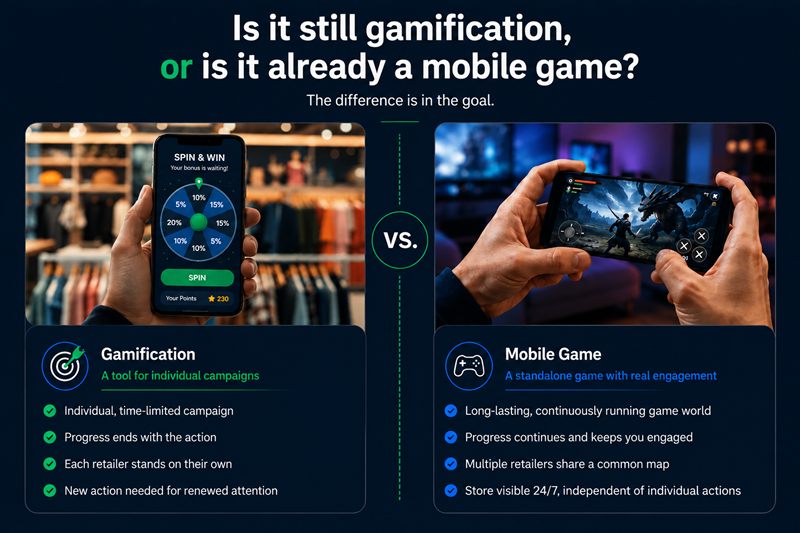
The most effective approach ties gamification to a specific location, rather than treating it as a purely online add-on. In physical retail, that means making the store visit itself part of the game experience, rather than just setting a digital incentive for a later purchase.
That's exactly the approach behind our platform: playful mechanics create an extra reason to visit in person, measurable in frequency and dwell time, without a discount having to remain the central element.
Conclusion
Gamification in marketing has an effect where it goes beyond the single purchase incentive and creates a real, recurring reason to engage with a brand. Using playful elements only as a short-term discount substitute wastes the real potential: customer loyalty that holds independently of price promotions and reaches exactly those younger audiences who barely respond to classic loyalty programmes any more.
Retail Gaming Solution is building a location-based platform that connects physical retail and brands in a digital ecosystem.