DE
DE EN
EN
An audience that knows different rules
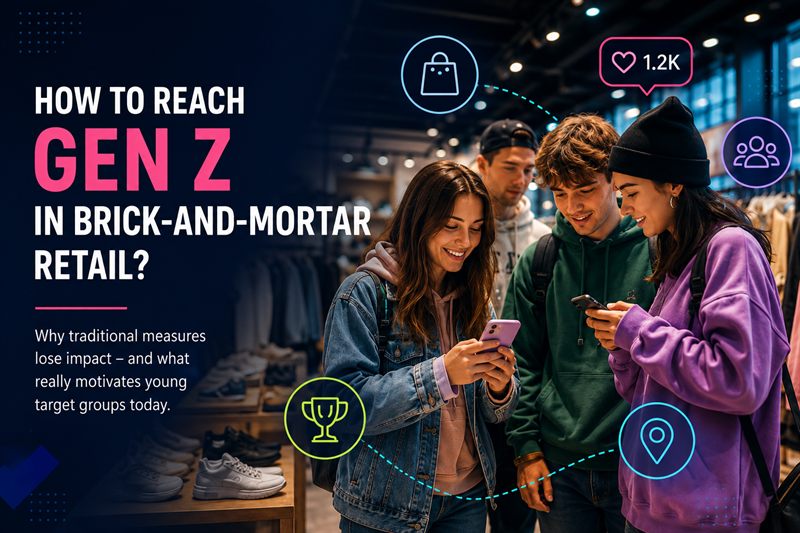
For many retailers, Gen Z is among the most interesting and, at the same time, most difficult audiences. Not because it is fundamentally wired differently from earlier generations, but because it grew up in a different world. Smartphones, social media, streaming platforms and digital communities aren't an innovation this generation had to work up to. They are the default state against which everything else is compared.
That has consequences for retail. Information is always available, prices can be compared in seconds, new trends appear and vanish via social networks before classic advertising can react. Winning attention was never easy, but with this audience it has become structurally harder.
Why classic measures no longer have the same effect
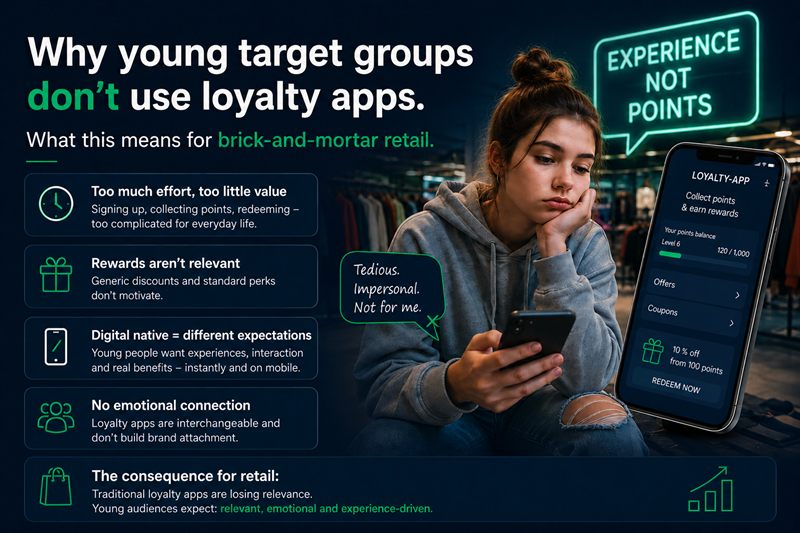
Discount promotions, loyalty cards, loyalty programmes, leaflets and classic advertising are proven instruments, and they have their place. The problem isn't that they're wrong, but that they were developed in an environment that has fundamentally changed. Younger audiences grow up in a world where they're confronted with hundreds of advertising messages every day. Advertising today no longer competes only with other ad campaigns. It competes with TikTok, Instagram, YouTube, Netflix, mobile games and a digital attention economy that runs around the clock.
On top of that, switching between providers is easier for this generation than for any before it. Price comparisons take seconds, reviews are available at any time, and alternatives are only a few clicks away. Many young consumers make purchase decisions situationally, not out of brand loyalty. It isn't the brand alone that decides on a visit, but convenience, experience, availability or a recommendation from their own network.
What actually motivates younger audiences
To reach Gen Z, you need to focus less on ad formats and more on motivation. That sounds abstract, but it's concrete: it isn't primarily about discounts or financial advantages. It's about interaction, about the feeling of being part of something, about visible progress, and about experiences that create a concrete reason to visit a particular place. Status plays a role, as do entertainment and the experience of community.
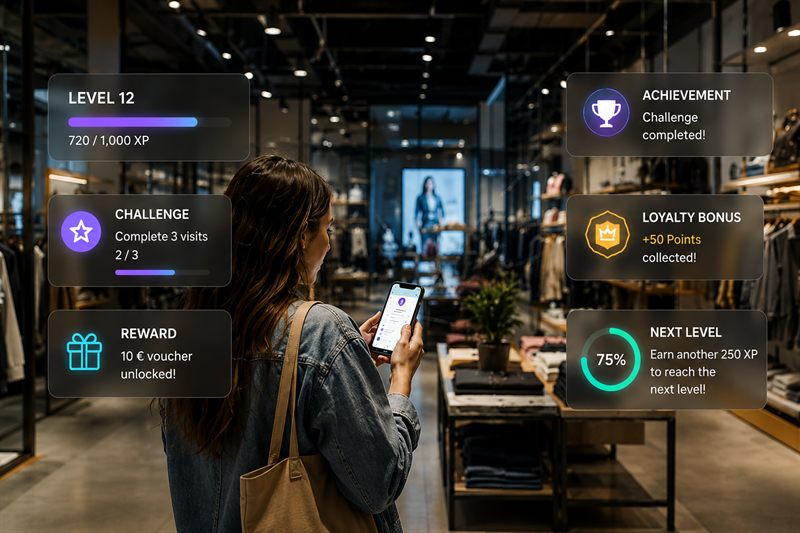
This motivation logic isn't unfamiliar; it's familiar from digital worlds. Young people spend a significant part of their free time in environments where progress, rewards, collections and interaction are a given. Mobile games, online communities and social platforms work on these principles, and they shape the expectations this audience has of digital and real experiences.
The difference between customer retention and customer activation
Many companies invest considerably in retaining existing customers, and that makes sense. Existing customers are valuable, and systems that bring them back more often pay off. But the strategic gap arises elsewhere: in the question of how to reach people who have no connection to a store or brand yet.
Customer retention addresses existing relationships. Customer activation addresses future ones. That's a fundamental difference that isn't separated clearly enough in many companies' retail strategy. A loyalty programme that rewards existing customers doesn't answer why someone should enter the shop for the first time. With Gen Z in particular, who make brand decisions situationally rather than out of habit, this difference is especially relevant.
What physical retail can use as an advantage
Physical retail has a structural advantage over online retail that no algorithm can replicate: it can create real experiences. Products can be touched and tried. People can be advised. Community can form. Events can take place. That's something a website doesn't offer, and it's exactly what many young people are looking for when they deliberately choose a physical place.
The problem isn't that this advantage doesn't exist. The problem is that it often isn't actively used. Many locations offer a transactional experience that feels interchangeable. Those who instead see their location as a place where something happens that doesn't exist online use this advantage deliberately. The question is no longer: how do I sell a product? The question is: why should someone visit this place?
New approaches that are gaining importance
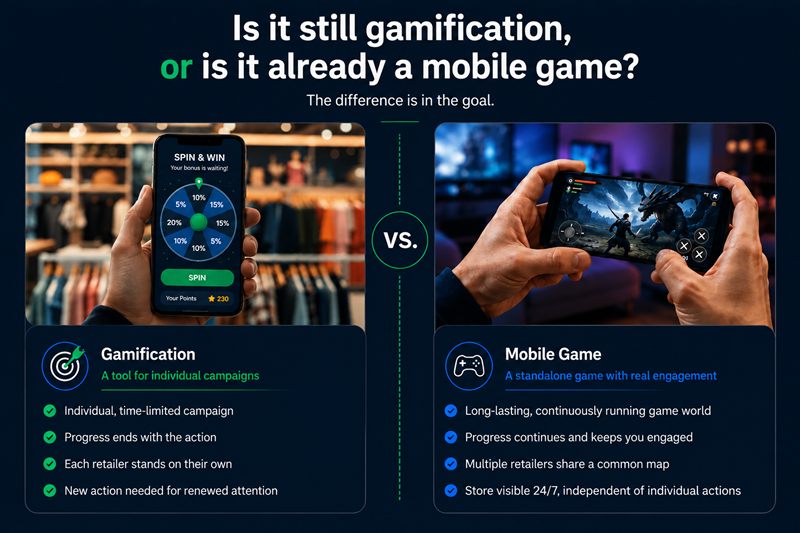
Many companies are already experimenting with concepts beyond classic advertising. Community events, influencer collaborations, digital extensions of in-store offers and playful mechanics are approaches that try to create real incentives for interaction, rather than buying attention solely through advertising. The shared principle behind them is the same: create a reason to visit that goes beyond the pure purchase.
Retail Gaming takes this idea further. By making real locations part of a digital world where younger audiences are already active anyway, an incentive arises that doesn't need to be explained or advertised. The location is already present where the attention is, and the visit unlocks something that isn't available online.
Conclusion
Gen Z doesn't present physical retail with unsolvable problems. It changes the conditions under which attention forms and purchase decisions are made. Classic instruments remain important parts of modern retail strategies, but on their own are no longer enough to reach an audience that expects interaction, experiences and understandable reasons to give its time to a particular place.
For retailers, one question is therefore becoming ever more important: how do I create a reason to visit that goes beyond the pure purchase? The answer to that question will increasingly decide which locations stay relevant for younger audiences and which don't.
Retail Gaming Solution is building a location-based platform that connects physical retail and brands in a digital ecosystem.