DE
DE EN
EN
An industry looking to catch up with a world that has long moved on
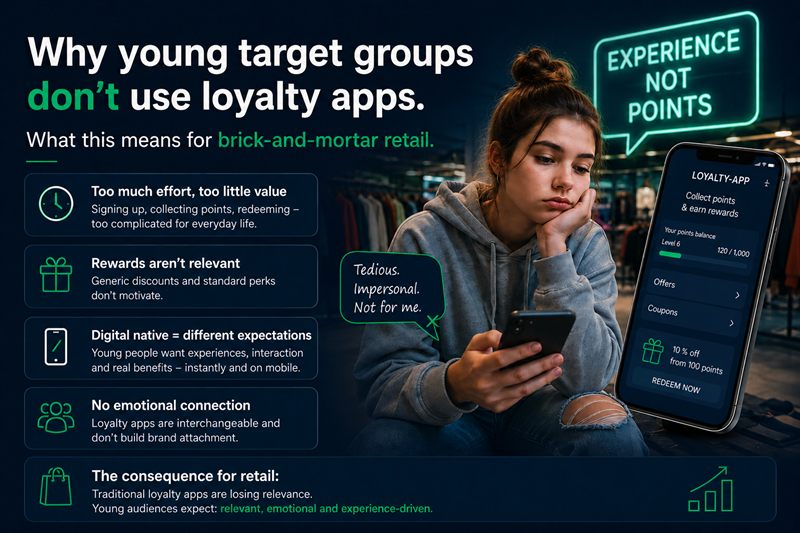
In recent years, physical retail has learned that attention is no longer a given. Classic ad formats lose their effect, younger audiences are harder to reach, and competition from online retail keeps growing. What's happening at the same time: gaming is now one of the biggest entertainment industries worldwide. Millions of people play mobile games every day, move around in digital communities and interact with systems built on progress, reward and social inclusion.
From the meeting of these two developments, a new field emerges that is increasingly drawing the attention of retailers, brands and investors: Retail Gaming.
What Retail Gaming concretely means
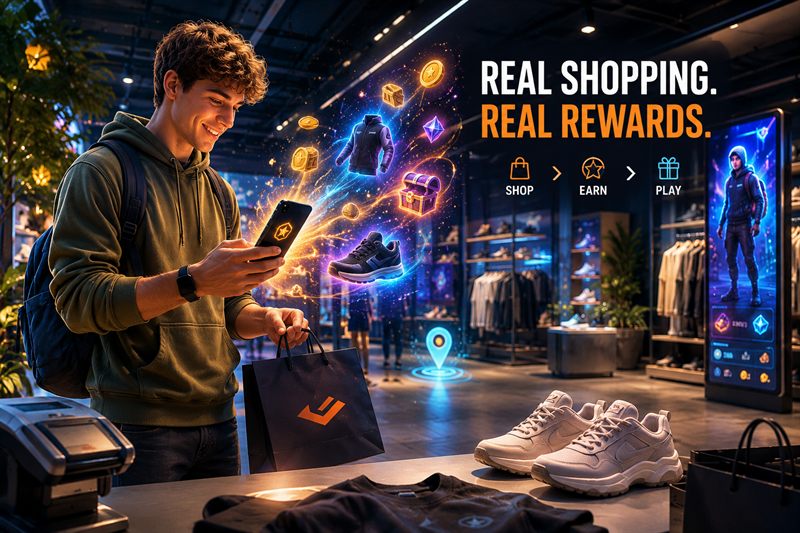
Retail Gaming describes the connection between physical retail and the mechanics of modern digital games. The goal isn't to replace the purchase or turn it into a game. It's to make real places more attractive through an additional digital layer, and to create new forms of customer activation that go beyond classic advertising and discount systems.
In practice, that means: players visit shops, collect digital rewards, take part in quests or unlock progress within a game world. Real places thereby become parts of a digital experience. The actual purchase stays unchanged. What's new is the additional motivation that arises because the physical visit is embedded in a bigger digital context.
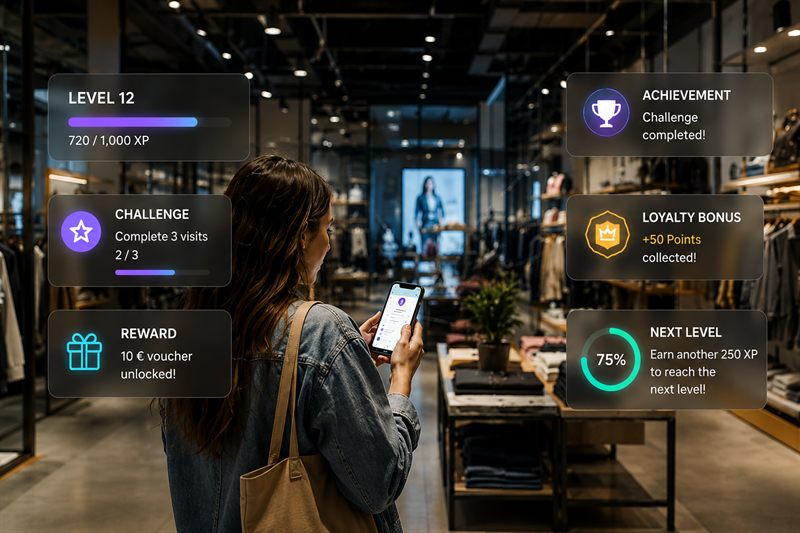
Concrete elements that can play a role in Retail Gaming concepts are digital rewards and virtual items, progress systems and level-ups, location-based quests and challenges, collection mechanics, community events, and time-limited promotions in which multiple participants take part together.
Why classic gamification isn't the same thing
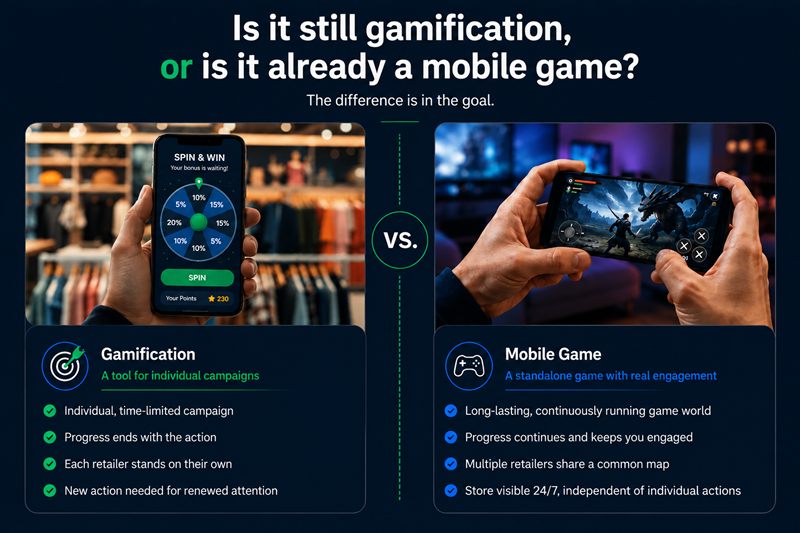
The terms Retail Gaming and gamification are often used interchangeably. That's a misunderstanding that blurs the difference between the two approaches.
Classic gamification uses individual game elements within existing processes: points systems, digital stamp cards, cashback programmes, badges or leaderboards. These systems are geared to a single brand or a single retailer. They reward existing customers for behaviour that would have happened anyway, and so create a transactional bond that depends on comparing terms.
Retail Gaming takes a structurally different approach. Here, real shops themselves become part of a digital experience world. The focus isn't on rewarding a purchase that's already been made, but on creating motivation that arises before the visit. Where gamification typically takes place inside a single brand, Retail Gaming can connect multiple real locations, brands and digital experiences with each other, and so create an ecosystem that stays relevant to users over time.
Why gaming speaks a different language to younger audiences
To understand why Retail Gaming works, you have to look at what younger generations grew up with. Level-ups, rare collectibles, daily challenges, community goals and time-limited events aren't foreign concepts for many people, but the normal course of an evening. These mechanics are a fixed part of modern mobile games and have shaped behaviour patterns that differ fundamentally from classic advertising or discount models.
People interact voluntarily and continuously with digital systems when those systems enable progress, reward or social inclusion. That willingness already exists. The question for physical retail is whether it wants to become part of this world, or keep trying to win attention with means that structurally miss this audience.
How Retail Gaming can work in practice
Retail Gaming isn't a single concept, but a framework that allows different forms of implementation. Location-based game worlds, in which shops appear as interactive places within a digital environment, are one approach. Digital rewards that visitors receive for physical presence are another. Quests and challenges that involve real places in their solution connect both layers directly.
Community events, in which several players take part together in time-limited promotions, create additional social motivation. Brand integration, in which brands become part of quests, events or digital reward systems, offers an alternative to classic ad formats that rely on passive perception. Depending on the concept and audience, this creates different connection points between digital interaction and the real visit.
What Retail Gaming can do for retailers and brands
For retailers, Retail Gaming opens up the possibility of generating attention for locations that doesn't depend solely on discount promotions or seasonal impulses. Digital audiences that are hard to reach through classic advertising can be addressed via game mechanics they already know from their everyday life. Locations gain a function within a digital experience that goes beyond the pure purchase, and thereby create reasons to visit that are structurally anchored.
For brands, opportunities arise beyond classic ad placements. Digital visibility within game worlds, integration into quests or events, virtual collections with a brand connection, and long-term presence within a digital ecosystem create touchpoints where users actively interact with a brand rather than perceiving it passively. That's a qualitatively different contact from an ad banner.
The challenges Retail Gaming brings with it
Retail Gaming isn't a sure thing. Not every audience responds the same way to game-based concepts, and a system that works for one user group can be irrelevant to another. Connecting digital and real systems technically has its own requirements, as do data protection and transparency, which matter particularly for digital applications with a location reference.
On top of that comes the question of long-term motivation. Playful systems have to stay relevant over time to be used continuously. An event that works once doesn't yet make an ecosystem. And companies need trackable metrics to assess the success of new concepts and justify internal decisions with them.
Where Retail Gaming is heading
The boundaries between the digital and real world are increasingly blurred. People who spend a significant part of their time in digital environments don't necessarily look for fewer real experiences. They look for real experiences that fit their digital world. In this context, physical retail has an advantage no online shop can replicate: physical space, the possibility of direct interaction, the experience on site.
Retail Gaming is an approach that connects exactly this strength with the digital world. Whether an independent field within retail develops from it will depend on how consistently retailers and brands are willing to think beyond existing categories. The growing interest in topics such as customer engagement, digital experiences and new forms of customer activation shows that the question is no longer whether gaming and retail come together. The question is who develops the model that really works.
Conclusion
Retail Gaming describes the structural connection between physical retail and the mechanics of modern digital game worlds. It isn't about turning the purchase into a game, but about embedding physical places in a digital experience that consumers seek out of their own accord. The difference from classic gamification lies in the approach: not rewarding an already completed transaction, but creating motivation that triggers the visit in the first place.
For retailers, brands and everyone who wants to keep physical retail relevant long term, Retail Gaming isn't a niche topic. It's the question of how physical places keep meaning in a world where digital experiences increasingly decide where people direct their attention.
Retail Gaming Solution is building a location-based platform that connects physical retail and brands in a digital ecosystem.