DE
DE EN
EN
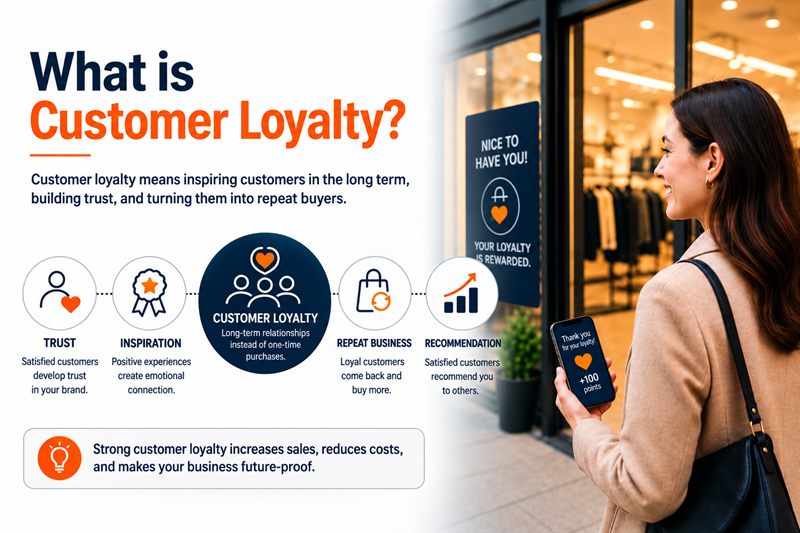
Customer loyalty refers to all the measures a company takes that lead customers to buy repeatedly, stay loyal to a brand, and not readily swap it for a competitor. Unlike pure customer satisfaction, which only describes a snapshot, customer loyalty aims at a lasting relationship that can rest on rational reasons such as price or convenience, as well as emotional reasons such as trust or identification. In German-language marketing literature, the "Handbuch Kundenbindungsmanagement" by Manfred Bruhn and Christian Homburg is regarded as one of the most comprehensive standard works on the topic (cf. Bruhn & Homburg, 2017).
What types of customer loyalty are there?
Customer loyalty can be broadly distinguished by what it rests on. With factual loyalty, a customer is tied in because switching is made difficult in practice, for example through contracts, contract terms or technical dependencies. With emotional loyalty, a customer stays voluntarily because they've built a positive inner relationship with the brand or shop. Classic loyalty instruments such as discount systems or bonus points mostly work on the factual side, while experiences, stories and positive interactions tend to strengthen the emotional bond. For companies, emotional loyalty is usually the more valuable, because it holds even when a competitor makes a cheaper offer.
What customer types can be distinguished?
In practice, a distinction is often made by the degree of loyalty between different customer types, ranging from loosely connected occasional buyers to closely bound regulars. In between are customers who buy regularly but would be ready to switch at any time, as well as those who actively identify with the brand and recommend it. This classification helps companies target measures more precisely, because an occasional buyer needs different incentives from an already loyal regular.
Which strategies build lasting customer loyalty?
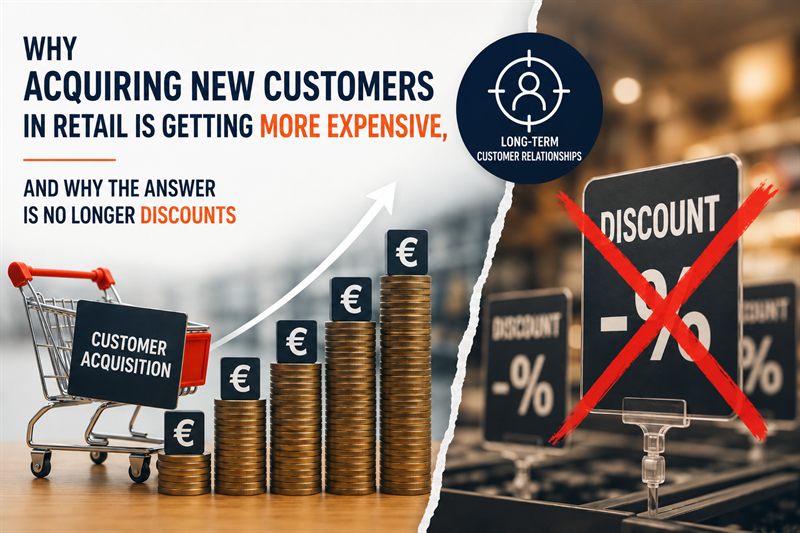
Classic loyalty measures include discount and bonus programmes, newsletters, personal advice, excellent customer service and loyalty points systems. These instruments have been established for decades, but are increasingly reaching their limits, especially in physical retail, where discount systems alone neither reach younger audiences nor build a genuine emotional bond. We've already looked in more detail at why a pure discount logic alone often isn't enough today in a separate article.
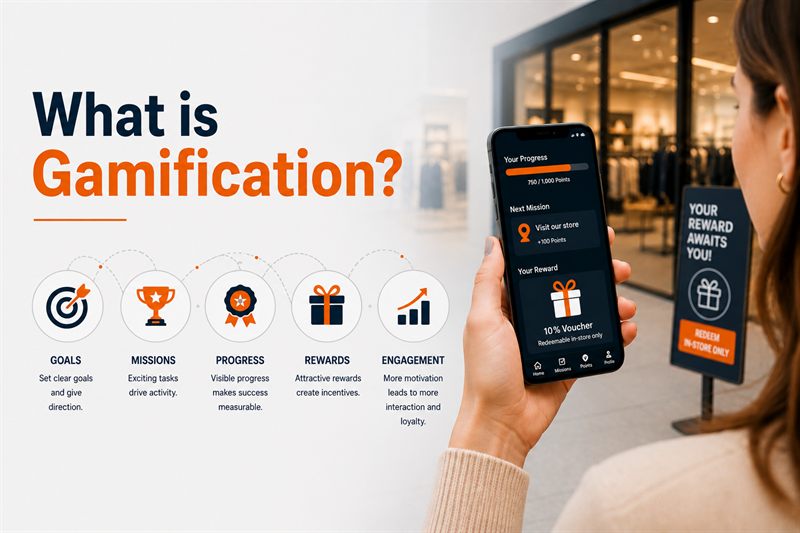
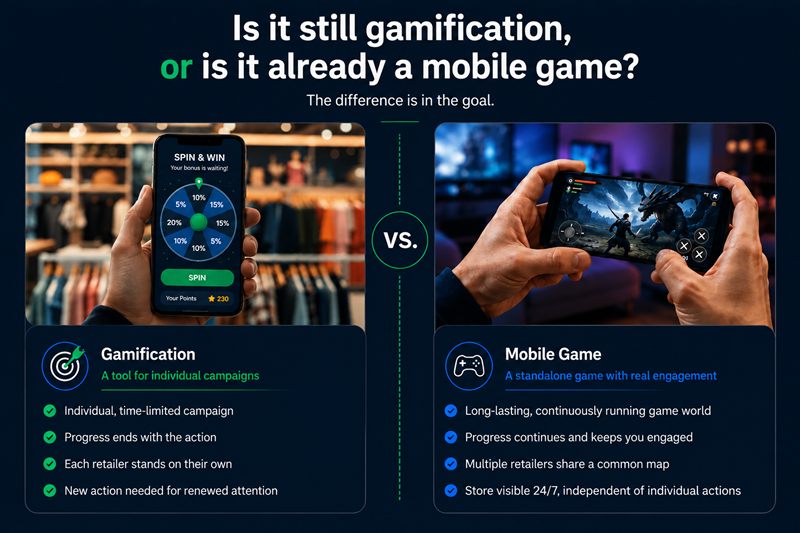
A more recent approach to retaining customers without classic discounts is gamification, the use of game-typical elements such as progress, reward and competition outside of games. This is exactly where our platform comes in, embedding physical locations into a mobile game so that customers are motivated by playful incentives to visit a real store, rather than by a price cut alone. As Retail Gaming Solution is currently in its pilot phase, our own reliable impact data can only be shown once the first pilot projects are complete.
Conclusion
Customer loyalty describes the lasting relationship between a company and its customers, which can rest either on practical switching barriers or on genuine emotional attachment. While classic instruments such as discounts and bonus points remain widespread, emotional loyalty is becoming increasingly important for companies, precisely because it's more robust against price competition. In physical retail, playful approaches such as gamification offer a still young but promising alternative to a pure discount logic.
Sources
Bruhn, M. & Homburg, C. (eds.) (2017). Handbuch Kundenbindungsmanagement. Strategien und Instrumente für ein erfolgreiches CRM. 9th edition. Springer Gabler.
Retail Gaming Solution is building a location-based platform that connects physical retail and brands in a digital ecosystem.