DE
DE EN
EN
Declining foot traffic is dismissed in most analyses with a single explanation: retail is losing to e-commerce.
That explanation is convenient, because it names an external cause that's hard to do anything about. But it's increasingly inaccurate. Numerous studies show that a significant share of Generation Z shops in physical stores regularly and even values the in-store experience.
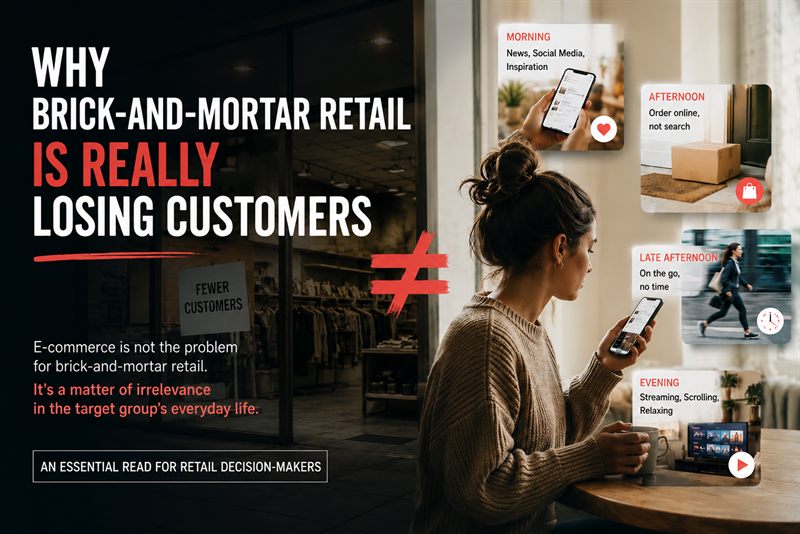
So the problem isn't that this audience shops online as a rule. The problem is that many stores simply no longer feature in this audience's digital everyday life.
The convenient explanation that falls short
Explaining declining foot traffic solely with e-commerce misses the real shift. E-commerce is a symptom of the shift in attention, not the cause. The real shift is about where attention forms today.
For younger audiences, attention increasingly forms in digital environments: in social networks, in communities and, increasingly, in mobile game worlds. A store that is visible only through classic channels such as its shop window, local advertising or seasonal promotions is no longer competing only with the shop next door.
It's competing for a fraction of the attention that a whole digital environment claims permanently.
What irrelevance actually means
In this context, irrelevance doesn't mean an offer is bad. It means an offer simply no longer comes to mind for the target audience when a purchase decision is due. A store can have a strong range, trained staff and fair prices and still lose foot traffic, because it isn't present at the moment of the decision.
Classic loyalty programmes often make this problem worse, as they retain existing customers but barely reach new, younger audiences, who don't perceive these programmes as attractive in the first place.
A store can do everything right and still be overlooked. That's exactly what distinguishes a relevance problem from a quality problem. A quality problem can be solved with a better range or better service. A relevance problem can only be solved by a store becoming present where its target audience is already active anyway.
Why this distinction matters for decision-makers
The distinction between e-commerce competition and irrelevance has direct consequences for how measures are prioritised. Those who believe they're losing to online retail often invest in their own online shop, in price promotions or in classic advertising.
Those who recognise that irrelevance is the real problem ask a different question. Not how the store becomes cheaper or more digital, but how the store becomes part of its target audience's everyday life again, regardless of channel.
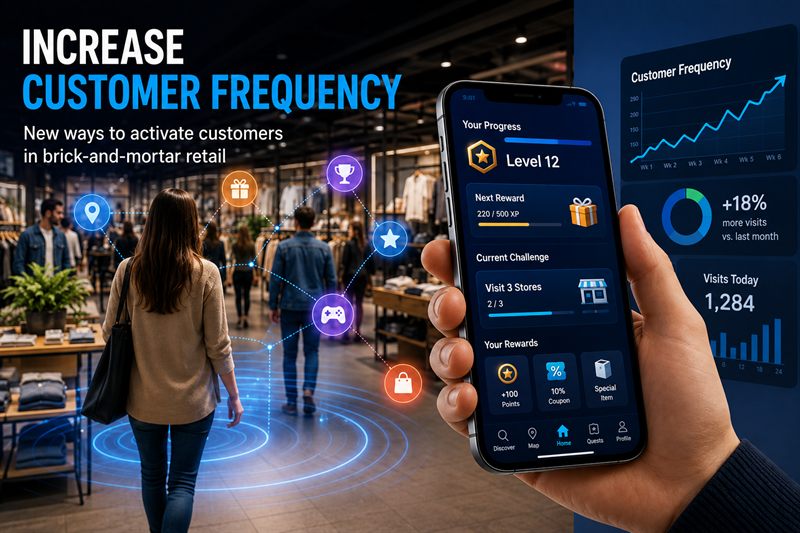
This second question leads to fundamentally different answers, such as new forms of activation that connect the physical location with digital behaviours, rather than treating the two separately.
What that means for the years ahead
Demographic change reinforces this effect further. Younger audiences grow up with permanent digital presence and increasingly transfer that expectation to their relationship with physical places too.
Retail that wants to stay relevant in the long term will have to be judged on whether it features in its target audience's digital reality at all, not just on whether its range is right.
This is exactly where the work of Retail Gaming Solution comes in, without a solution being presented in detail here. The first step is to name the problem precisely, before talking about answers.
Conclusion
Physical retail isn't primarily losing to e-commerce. It's losing visibility in its target audience's digital everyday life. This distinction decides whether the right measures are taken, or whether resources flow into symptoms rather than causes.
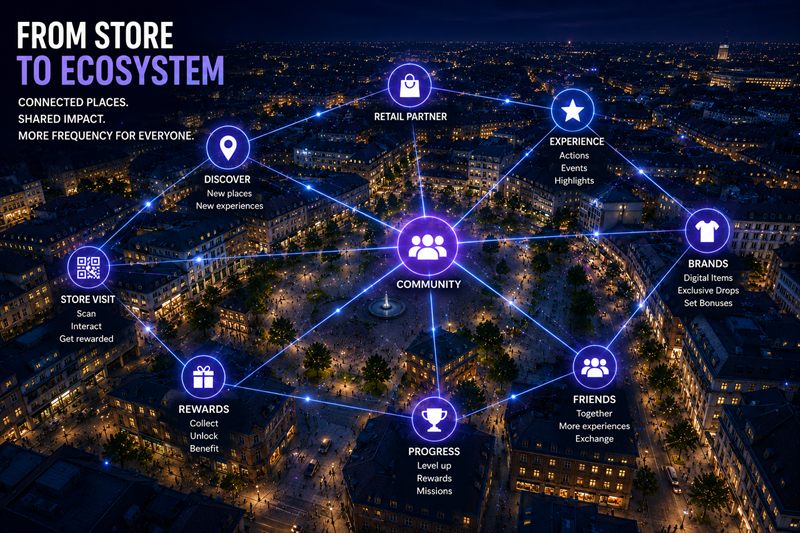
Retail Gaming Solution is building a location-based platform that connects physical retail and brands in a digital ecosystem.