DE
DE EN
EN
Visiting a shop is no longer a given
Twenty years ago, a well-placed shop window, a leaflet in the letterbox or an ad in the local paper was enough to bring people into a shop. Those times are over. Today, every physical retailer competes at once with online shops, social-media platforms, streaming services and a digital attention economy that runs around the clock. For many consumers, the trip to the shop has become a deliberate decision that needs a real reason.
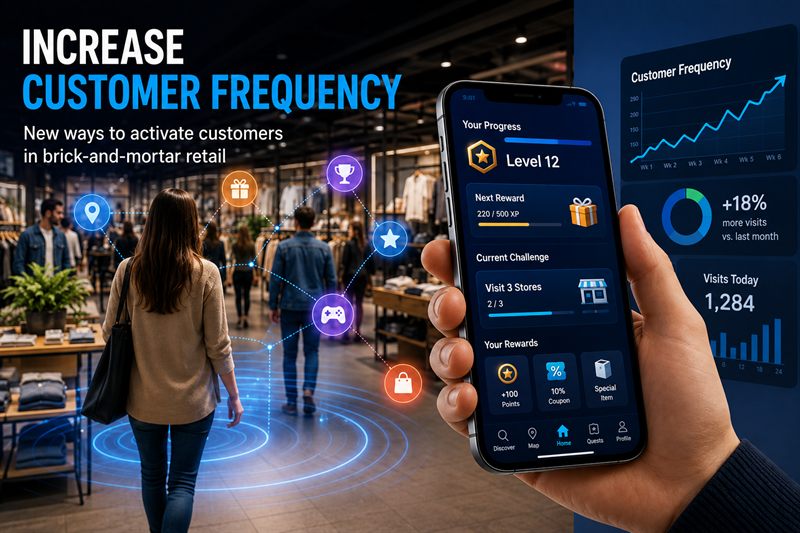
That fundamentally changes the strategic starting point. The question is no longer just how a sale can be closed. The real challenge is getting people into the store in the first place. For many retailers, foot traffic has therefore become the most important metric of all, because without visitors there are no advice conversations, no product experiences and ultimately no sales.
What the classic toolkit does, and where it ends
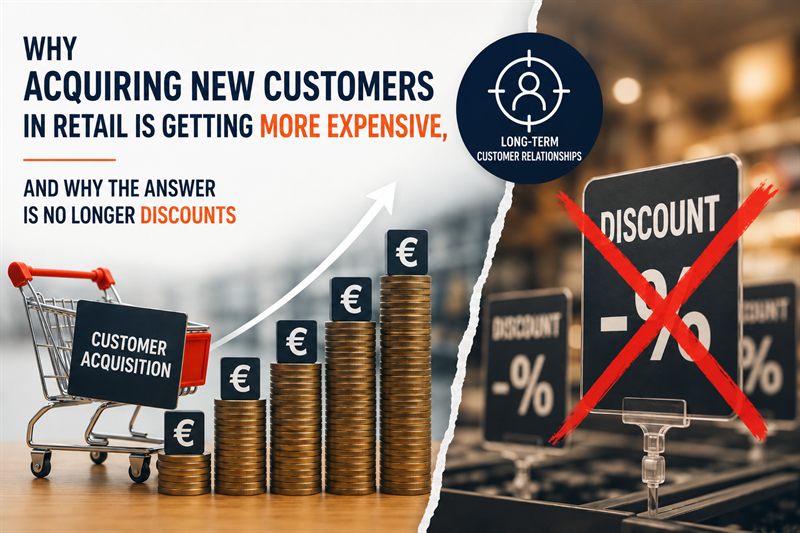
Over decades, physical retail has developed a proven toolkit. Discount promotions are among the most frequently used means, because they can create short-term attention and trigger additional purchases. The problem is well known: discounts reduce margins, train customers to wait for special offers, and don't strengthen the actual customer relationship. Whoever comes only for the price stays only for the price.
Loyalty programmes take a different approach and can be quite successful when it comes to retaining existing customers long term and encouraging repeat purchases. But their structural weakness lies elsewhere: they're aimed at people who are already customers. They don't answer the question of how to reach people who have had no contact with the brand or store so far. Classic advertising, whether poster, flyer or digital campaign, in turn fights against sensory overload, where consumers are confronted with hundreds of messages a day and don't notice most of them. Events and promotions create temporary effects, tie up resources and rarely leave structural foot traffic behind.
That doesn't mean these instruments are worthless. It means they're no longer enough on their own.
Why customer retention and customer activation are two different tasks
In retail, these two terms are regularly confused, even though they address fundamentally different problems. Customer retention asks: how do I keep existing customers and bring them back more often? Customer activation asks: how do I get people who have no contact with the brand yet to visit my store at all?
A loyalty programme rewards behaviour that's already happening. A customer buys a product and collects points. A customer visits a store and gets a bonus. That makes sense, but doesn't answer why someone should enter a shop for the first time. Customer activation comes in earlier, at the trigger of the visit itself. Why does a person decide to go to a particular place? What gives them a reason to invest time in a store when they could conveniently order the same products from home?
Those who rely solely on customer retention can maintain existing relationships, but risk never reaching new audiences. For many retailers, exactly this gap becomes a structural problem.
How younger audiences' attention has changed
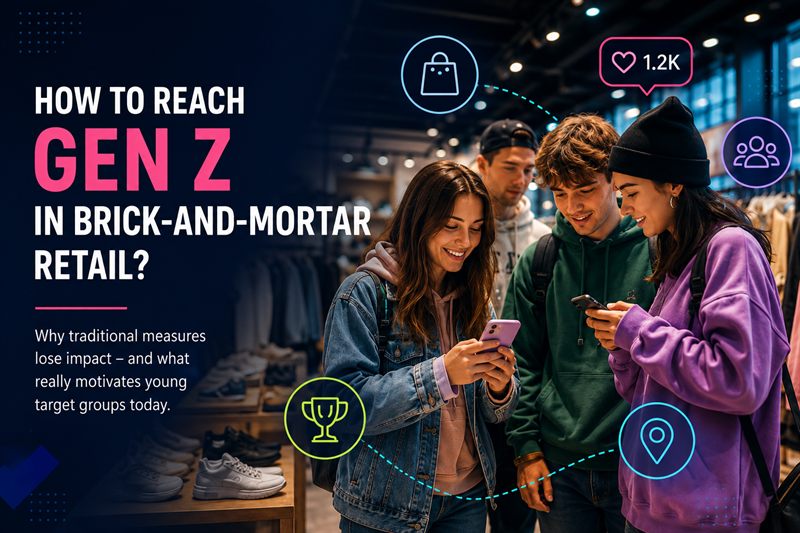
Younger generations in particular now spend a significant part of their free time in digital environments. Mobile games, streaming platforms, social networks and digital communities aren't a fringe pastime, but a central part of everyday life. What comes with that is a changed expectation of how digital experiences work.
Level-ups, rewards, collections, daily challenges and community experiences have become second nature to many people. These mechanics convey progress, create curiosity and provide reasons to keep coming back. People don't just want to consume information. They want to interact, achieve something and be part of an active environment. Anyone aiming classic retailer apps or discount coupons at this audience speaks a language that doesn't land, because the contrast with what they interact with every day is too great.
What Retail Gaming does differently
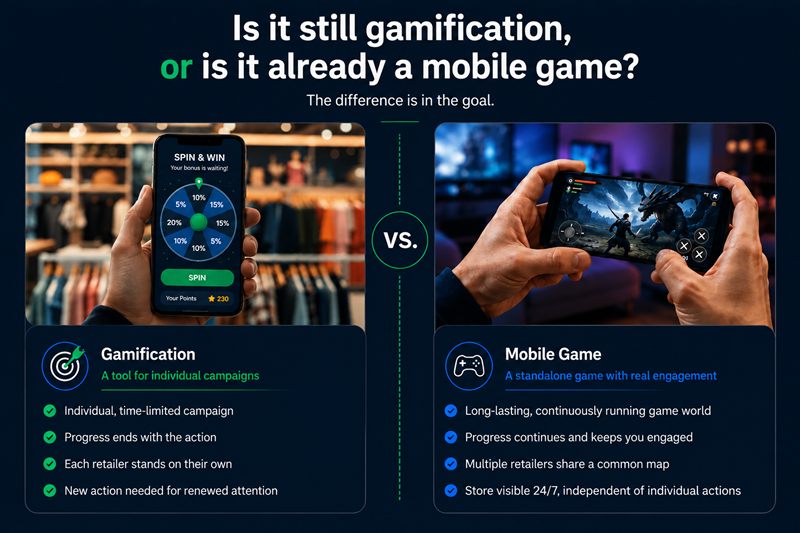
From the realisation that classic instruments hit structural limits, a new field emerges: Retail Gaming. It connects physical retail with the mechanics of modern mobile games, without retailers having to become game developers themselves. Real locations become part of a digital environment in which players discover them, visit them and make progress within a game world through their visit.
The decisive difference from classic gamification lies in where the approach takes hold. Gamification elements inside a retailer app assume the user has already installed the app and opens it regularly. Retail Gaming turns this logic around: the retailer becomes part of a world where the target audience is already active every day. The attention already exists. The location comes to where the users are, rather than waiting for users to come to yet another proprietary system.
The focus isn't on customer retention in the classic sense, but on activating additional visits and interactions. Visiting a shop becomes part of a bigger digital journey that consumers pursue of their own accord.
What that means for retailers
The competition for attention won't ease in the coming years. Digital platforms will keep growing, and the time people spend in digital environments won't fall. For physical retailers, the question is therefore clear: how do real locations stay visible and relevant within this digital attention?
Discounts, loyalty programmes and advertising will remain part of modern retail strategies. But on their own they won't be enough to reach audiences whose attention is structurally elsewhere. New forms of customer activation that connect digital motivation with real visits will therefore no longer be an option for many retailers, but a strategic necessity.
Conclusion
The challenge for physical retail no longer lies primarily in selling. It lies in giving people a real reason to come at all. Classic instruments only partly address this problem, because they're either aimed at existing customers or rest on an attention that has to be bought at ever-higher cost in a saturated market.
Retail Gaming is an approach that starts somewhere else: not with the transaction, but with the motivation. Real locations become part of a digital experience that consumers actively seek out. The future of foot traffic won't be decided by advertising alone, but by the ability to give people reasons to visit that are anchored in their digital reality.
Retail Gaming Solution is building a location-based platform that connects physical retail and brands in a digital ecosystem.